The gas stove vs electric stove debate is one of the most genuinely consequential kitchen appliance decisions any home cook makes. According to the US Energy Information Administration, electric stoves have become the dominant cooking appliance in American households — with electricity-powered cooking increasing significantly as induction technology has improved cooking performance while concerns about indoor air quality from gas combustion byproducts have influenced purchasing decisions among health-conscious home cooks.
But dominance in market share does not equal universal superiority — and the honest answer to gas stove vs electric stove which is smarter for your kitchen is that it depends on factors specific to your cooking style, your home infrastructure, your health priorities, and what you actually cook most often.
This guide gives you the complete honest comparison that most appliance retailers cannot give you because they have something to sell. Both gas and electric stoves have genuine advantages and genuine limitations — and knowing which advantages matter for your specific situation is the knowledge that makes the right choice clear.
Understanding the Core Difference
Before comparing specific attributes, understanding the fundamental difference in how gas and electric stoves deliver heat explains most of what follows.
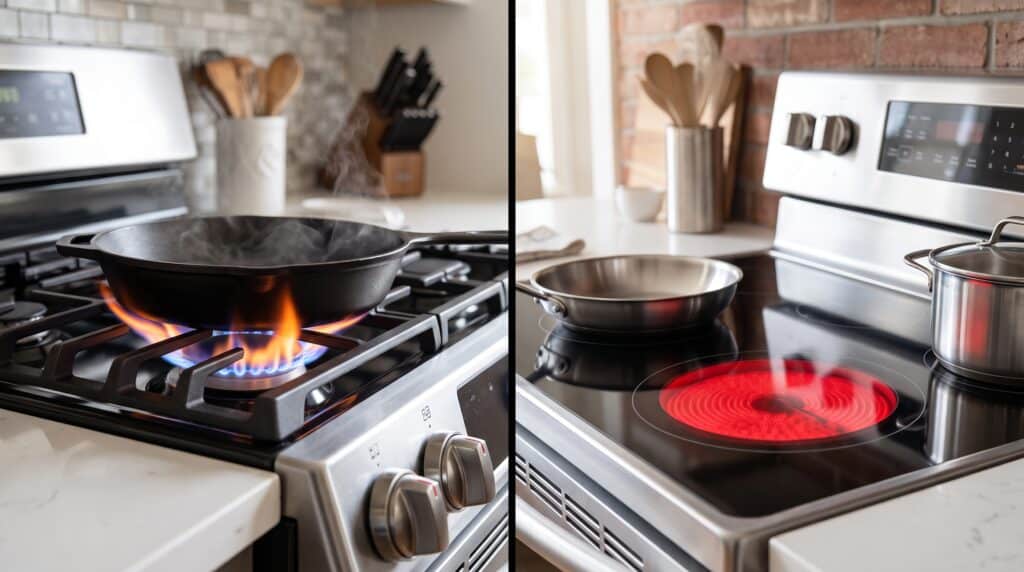
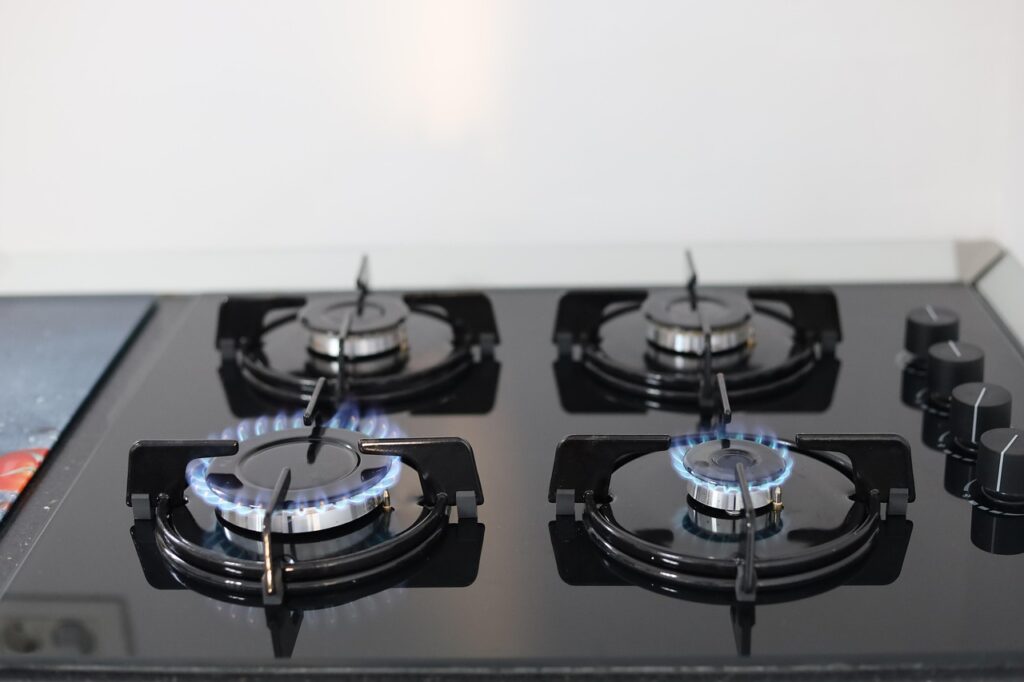
Gas stoves burn natural gas or liquid propane to produce an open flame that heats cookware directly through contact with combustion heat. The flame is visible, immediately responsive to adjustments, and produces heat that surrounds the base of the pan rather than contacting only the flat bottom surface.
Electric stoves convert electrical current into heat through either a coil element (the traditional electric stove), a ceramic glass surface with hidden coil elements beneath (the smoothtop electric), or electromagnetic induction (the induction cooktop, technically a separate category but increasingly what people consider when they think about electric cooking). Each of these electric types has different performance characteristics — a traditional coil electric performs differently from an induction cooktop despite both being electric.
For the purposes of this comparison, electric refers primarily to the smoothtop ceramic electric that represents the most common electric stove type in current homes, with induction noted separately where its characteristics differ significantly from standard electric.
Gas Stove vs Electric Stove: Comparisons
The following sections compare gas stove vs electric stove across several key factors to help you understand their differences and choose the right option for your kitchen.
1. Cooking Performance Comparison
This is the comparison that home cooks care about most — and it produces genuinely different answers depending on what you cook.
Where gas wins on cooking performance:
Temperature responsiveness is gas’s strongest cooking performance advantage. When you turn a gas flame from high to low the heat change is immediate — the visible flame reduces instantly and the pan temperature begins dropping within seconds. When you reduce a standard electric element the thermal mass of the element maintains heat for a significant period after the power setting is reduced — the lag that causes the sauce to keep boiling after you have turned it down and the butter to keep browning after you intended to stop.
This responsiveness matters most for the techniques that require quick heat adjustment — finishing a sauce, searing then reducing to simmer, the wok cooking that requires the specific heat variation that gas provides naturally. Professional chefs favor gas overwhelmingly for the same reason — the visible flame and immediate response give precise control that the electric lag cannot match for technique-dependent cooking.
High heat generation is gas’s second cooking performance advantage. Gas burners at maximum output typically produce more BTU (British Thermal Units) than standard electric elements — the high heat output that searing, wok cooking, and bringing large volumes of liquid to a boil quickly requires.
Where electric wins on cooking performance:
Even heat distribution across the cooking surface is electric’s strongest performance advantage over gas. Gas flames heat the center of a pan more intensely than the edges — the hot-center effect that produces uneven cooking in situations where consistent heat across the entire pan surface matters. Electric elements — and induction particularly — heat the pan more evenly across the complete bottom surface, which benefits baking applications, simmering sauces that need even gentle heat, and anything where a hotspot in the pan center would affect the result.
Induction’s performance advantage extends beyond even heating to the specific characteristic that makes it genuinely superior to both gas and standard electric for precise low-temperature cooking — the ability to maintain temperatures at specific low settings that gas cannot achieve at its lowest flame and that standard electric cannot reach at its lowest element setting without cycling on and off.
Cooking performance summary: Gas for high heat, rapid response, and flame cooking techniques. Electric (especially induction) for even heating, low-temperature precision, and baking applications. Neither is universally superior — the winner depends entirely on what you cook most frequently.
2. Heat Control Comparison
Heat control is closely related to cooking performance but deserves separate examination because it is the cooking experience factor that most affects daily cooking satisfaction.
Gas provides visual heat control feedback through the flame — you can see the heat level you have set and make intuitive adjustments based on visual information rather than relying entirely on dial position or digital setting. This visual feedback is the advantage that experienced cooks particularly value because it matches the intuitive heat management that skilled cooking requires.
Standard electric smoothtops provide minimal immediate heat control feedback — the element glows red at high heat and returns to invisible at low heat with minimal visual differentiation between intermediate settings. This absence of visual feedback makes precise heat management more dependent on experience with a specific stove’s behavior than gas allows.
Induction provides the most precise numeric heat control of any cooking surface — digital settings that specify exact power levels and maintain them consistently regardless of what is being cooked. This precision suits the cook who wants reproducibility across sessions more than the cook who relies on intuitive visual adjustment.
3. Safety Comparison
Safety is increasingly a significant factor in the gas versus electric stove decision — and the honest safety comparison contains considerations that many gas stove advocates underemphasize.
Gas stove safety concerns:
Indoor air quality is the most significant safety concern with gas stoves that recent research has brought to wider awareness. Gas combustion produces nitrogen dioxide, carbon monoxide, and fine particulate matter as byproducts — pollutants that accumulate in kitchen and adjacent living space air during cooking. Research published in medical and environmental science journals has associated regular gas stove use in inadequately ventilated kitchens with elevated respiratory irritation, and some studies have linked childhood asthma rates to household gas cooking exposure.
Open flame creates the ignition risk for loose clothing, kitchen towels, and anything flammable near the burner that electric surfaces do not produce. The gas pilot light or ignition spark produces a reliable ignition in normal operation but also introduces the gas-without-ignition scenario if the burner fails to ignite and gas continues to flow — the situation that adequate ventilation and prompt response manages safely but that sealed or poorly ventilated kitchens handle more dangerously.
Electric stove safety advantages:
No combustion byproducts — the indoor air quality concern that gas stoves introduce does not exist with electric cooking of any type.
No open flame — the ignition risk that gas flames create for nearby flammable materials is completely absent from electric surfaces.
Induction’s specific safety advantage is the cooktop surface that does not itself heat up — only the pan heats through electromagnetic induction while the cooktop surface remains near room temperature. A child touching an induction cooktop immediately after cooking encounters a warm but not burn-temperature surface, unlike the dangerous temperatures that gas burners and electric elements sustain after cooking.
Safety summary: Electric stoves — and induction specifically — have meaningful safety advantages over gas, particularly for households with young children and for kitchens with limited ventilation.
4. Energy Efficiency and Cost Comparison
Energy efficiency:
Gas and electric stoves compare differently on efficiency depending on whether you measure the efficiency at the appliance or the full-system efficiency from the energy source.
At the appliance level electric is more efficient — more of the electrical energy input converts to useful cooking heat than the percentage of gas combustion energy that reaches the food. Induction is the most efficient of all cooking surfaces at the appliance level — electromagnetic heating of the pan directly produces minimal wasted heat to surrounding air.
At the full-system level the comparison depends on how the electricity in your region is generated and what the relative costs of natural gas and electricity are in your specific utility market — both of which vary significantly by location.
Operating cost:
Natural gas typically costs less per unit of energy than electricity in most US markets — meaning gas cooking is usually cheaper per cooking hour than standard electric cooking in dollar terms despite the electric appliance’s higher energy efficiency. This apparent paradox resolves when you understand that the lower cost-per-unit of gas energy more than compensates for the efficiency difference in most markets.
Induction, despite being electric, can approach gas operating costs in some markets due to its efficiency advantage over standard electric reducing the electricity consumed per cooking session.
Installation cost:
Homes with existing gas lines can install gas stoves with standard connection and no significant infrastructure cost. Homes without existing gas lines face significant installation cost for running a new gas line that makes gas stove adoption a more expensive proposition than the appliance price alone suggests.
Electric stoves require a 240-volt outlet — standard in most homes but requiring electrician installation if not already present.
5. Ease of Cleaning Comparison
Cleaning is where electric smoothtops have their clearest and least contested advantage over gas stoves.
A gas stove’s grates, burner caps, and burner bases are multiple removable components that trap food residue in the gaps between them and require individual cleaning after each significant cooking session. The spaces around the burner bases where food falls and bakes onto the drip surfaces are the most labor-intensive cleaning areas of any cooking appliance type.
An electric smoothtop is a single flat glass-ceramic surface with no gaps, no grates, and no removable components. Spills sit on the flat surface and wipe off with a smoothtop cleaner and a cloth — the fastest and easiest cooktop cleaning experience available.
The single smooth top cleaning limitation is the food that burns onto the surface during high-heat cooking — the spill that lands on a hot burner area and carbonizes before it can be wiped. These baked-on residues require a ceramic cooktop scraper and more effort than the simple wipe that non-baked spills need. Gas stoves with sealed burners (as opposed to the older open-burner designs) have significantly improved in cleaning ease compared to their predecessors but still do not match the smooth top convenience.
Which Should You Choose?
Choose gas if:
You cook techniques that require rapid heat response — stir-frying, searing, flame cooking. You are an experienced cook who values visual flame feedback for intuitive heat management. Your kitchen has good ventilation and your household does not include young children or members with respiratory sensitivities. Your home already has a gas line, making installation straightforward and operating costs lower.
Choose electric (smoothtop) if:
You want simpler cleaning and are willing to accept slightly slower heat response. Your home does not have a gas line and you do not want to incur gas line installation costs. You bake frequently and value the even heat distribution that electric surfaces provide.
Choose induction if:
You want the best of both worlds — the responsiveness of gas (induction responds faster than gas in some measurements) with the even heating and safety of electric. You have young children and the cool-surface safety of induction is a meaningful priority. You cook frequently and the long-term energy efficiency advantage of induction is worth the typically higher upfront cost.
Understanding what each cooking appliance type genuinely does best allows you to make the right choice for your specific cooking habits rather than the default choice that most people make without comparing the two honestly. For the complete companion comparison that covers the stovetop-adjacent appliance decision check out our honest guide on slow cooker vs Instant Pot — which time-saving cooker actually suits your cooking style and lifestyle.
The cookware you use matters as much as the heat source beneath it — and the right combination of stove type and cookware material produces the best cooking results from both. For the cookware decision that interacts most directly with your stove choice check out our complete comparison of nonstick vs stainless steel cookware — the foundational cookware decision that determines which stove type you will get the most out of.
Frequently Asked Questions
Q: Is gas or electric cheaper to run?
A: In most US markets gas is cheaper per cooking hour in dollar terms despite electric being more energy-efficient at the appliance level — because natural gas costs less per unit of energy than electricity in most regions. This varies significantly by location and the relationship between local gas and electricity prices in your specific market. Check your utility rates to calculate the specific comparison for your home.
Q: Can I switch from gas to electric without major renovation?
A: Switching from gas to electric requires a 240-volt outlet at the stove location which most homes already have for the original electric dryer or range. If the outlet is not present an electrician installs it. The gas line at the stove location should be properly capped by a licensed plumber — a safety requirement rather than simply disconnecting the line.
Q: Does gas or electric cook food better?
A: Neither cooks all food better — each excels at different applications. Gas provides the rapid response and high heat that searing and wok cooking require. Electric provides the even heat and low-temperature precision that baking and delicate sauce work require. Serious cooks who frequently tackle both application types sometimes maintain both a gas range for stovetop work and an electric oven for baking.
Q: Are gas stoves being banned?
A: Some jurisdictions have enacted or proposed restrictions on new gas appliance installations in new construction — motivated by indoor air quality and greenhouse gas emission concerns. These restrictions apply to new construction in specific localities and do not affect existing gas appliances in current homes. Check the regulations applicable to your specific jurisdiction if this is a concern for a new build or major renovation.
Q: Which type of stove holds its value better?
A: Quality matters more than fuel type for appliance value retention. Premium gas ranges from professional brands retain value well in markets where gas cooking is culturally valued. Premium induction ranges retain value in markets where energy efficiency and safety are prioritized. The trend toward electrification in many markets may affect gas appliance resale value over the longer term as gas infrastructure in residential settings potentially declines.
Conclusion
The gas stove vs electric stove decision does not have a universal right answer. It has the answer that is right for your cooking style, your infrastructure, your household safety priorities, and your utility cost situation — and this guide has given you every dimension of that comparison honestly.
If you love flame cooking, value immediate heat response, and cook in a well-ventilated kitchen, gas is a genuinely excellent choice that serious cooks have preferred for good reasons across generations. If you want simpler cleaning, safety advantages particularly for families with young children, or you cook in a kitchen without existing gas infrastructure, electric — and particularly induction — is the smarter choice in 2026 for compelling reasons that extend beyond personal preference into measurable cooking performance and safety advantages.
Make the decision based on your actual cooking and your actual kitchen. Both will serve you well when matched to the right situation.
Explore the complete collection of kitchen guides and product reviews at BudgetKitchenPick.com — Budget Kitchen Pick Blogs Page — for honest practical advice on every kitchen appliance and cooking decision you face. For the kitchen appliance that eliminates hand washing entirely without any plumbing installation check out our complete guide to the best countertop dishwashers for small kitchens — 10 brilliant portable picks that clean dishes effortlessly on any counter.