The microwave vs air fryer debate is one of the most common kitchen appliance questions home cooks face when setting up or upgrading their kitchen. According to the Association of Home Appliance Manufacturers, air fryer ownership in US households has grown by over 400% in the last five years — making it the fastest growing kitchen appliance category in recent history while microwave ownership remains near universal at over 90% of American households — creating the appliance comparison question that millions of home cooks ask when deciding whether to add an air fryer alongside or instead of their existing microwave.
Both appliances heat food quickly but they work through completely different mechanisms that produce dramatically different results for different food types — understanding these differences is the key to making the right choice for your specific cooking habits.
The microwave vs air fryer question does not have a single correct answer that suits every cook in every kitchen — it has a correct answer specifically for your cooking habits kitchen size budget and food quality priorities. This complete comparison gives you everything you need to make that specific decision confidently rather than based on popularity or marketing claims alone.
How Each Appliance Actually Works?
Understanding the fundamental mechanism of each appliance explains every performance difference that follows — because how each heats food determines what it does well and what it cannot do at all.
Microwaves heat food through electromagnetic radiation — microwave energy that penetrates food and causes water molecules within the food to vibrate rapidly generating heat from within the food itself rather than from an external heat source. This internal heating from water molecule vibration is extremely fast but produces no surface browning or crisping — food heated by microwave emerges hot throughout but with the same surface texture it had before heating.
Air fryers heat food through rapid forced hot air circulation — a powerful fan circulating extremely hot air around food at high speed creating conditions similar to deep frying but without immersion in oil. This circulating hot air contact heats food from the outside in while simultaneously creating the Maillard reaction surface browning that produces the crispy golden texture that makes air fryer food so much more appealing than microwave heated alternatives for many applications.
This fundamental mechanism difference explains everything — microwave excels at speed and moisture retention while air fryer excels at crispiness and browning that water based heating cannot produce.
Detailed Comparisons… Microwave vs Air Fryer
1. Speed Comparison
Microwave Speed
The microwave is the fastest kitchen heating appliance available for most standard reheating and defrosting tasks — heating a bowl of soup in 2 minutes reheating a plate of leftovers in 3–4 minutes and defrosting frozen food in 5–10 minutes through its direct internal water molecule heating mechanism that requires no preheat time and no heat up period before food is placed inside.
The microwave requires zero preheat time — food goes in immediately and heating begins instantly. For quick single portion reheating and defrosting tasks this zero preheat advantage makes the microwave faster in total time from decision to eating than any alternative for these specific applications.
Air Fryer Speed
Air fryers require a 3–5 minute preheat period before food is placed inside — the heating element and fan bringing the cooking chamber to target temperature before food enters. This preheat requirement adds meaningful time to short cooking tasks but becomes proportionally insignificant for longer cooking applications where the preheat represents a small fraction of total cooking time.
Once preheated air fryers cook many foods faster than conventional ovens — chicken wings in 20 minutes versus 35 minutes in a conventional oven frozen fries in 15 minutes versus 25 minutes and bacon in 8 minutes versus 15 minutes. But for simple reheating tasks the microwave completes in 2–4 minutes the air fryer’s preheat alone exceeds the microwave’s total cooking time.
Speed Winner: Microwave for reheating and defrosting. Air fryer for cooking fresh food faster than conventional methods. Overall speed tie depending on the specific task.
2. Food Quality Comparison
Microwave Food Quality
Microwave heating produces food that is hot throughout but texturally unchanged from its pre-heating state — soups and liquids emerge hot and ready to eat pizza reheats warm but soft and potentially rubbery leftover fried food reheats warm but completely limp and unappetizing. The water molecule heating mechanism that makes microwaves fast also makes them incapable of producing any surface texture change that depends on moisture evaporation and surface browning.
For liquid foods soups beverages and moisture rich dishes the microwave produces entirely acceptable results — the heating mechanism well suited to applications where texture change is not desired. For crispy battered fried and roasted foods the microwave produces disappointing results regardless of time and power settings because the underlying heating mechanism simply cannot produce the dry surface heat that crispiness requires.
Air Fryer Food Quality
Air fryer results for appropriate food types are genuinely impressive — producing the crispy golden surface texture that deep frying creates through hot oil immersion but without the oil saturation and caloric addition that deep frying involves. Chicken wings emerge with genuinely crispy skin frozen fries produce golden crispy exteriors roasted vegetables achieve the caramelized surface that oven roasting creates in half the time and reheated pizza recovers its original crispy crust rather than the soggy softness that microwave reheating produces.
The Maillard browning reaction that air fryer hot air contact produces creates flavor complexity and textural appeal that microwave heating simply cannot generate — the specific chemical reaction between amino acids and reducing sugars at high surface temperatures that produces the brown crispy surfaces humans find instinctively appealing across virtually every cuisine worldwide.
Food Quality Winner: Air fryer for most food types — particularly anything that benefits from crispy texture or surface browning. Microwave adequate for liquids and moisture rich dishes where texture change is not desired.
3. Versatility Comparison
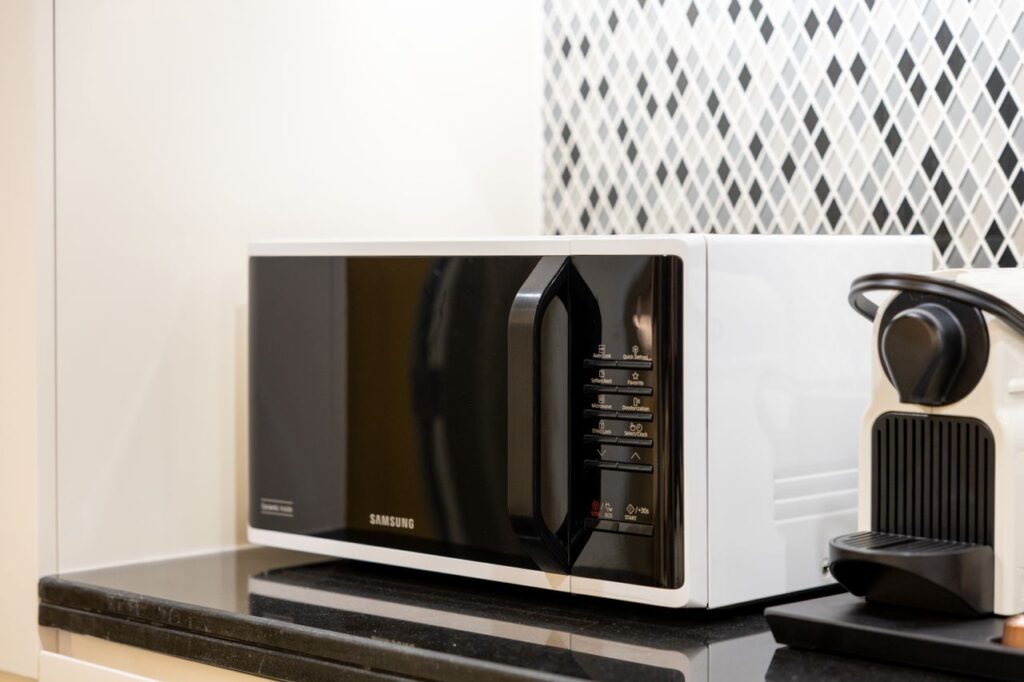
Microwave Versatility
Microwaves handle an impressive range of kitchen tasks beyond simple reheating — defrosting frozen food steaming vegetables cooking simple dishes like scrambled eggs oatmeal and mug cakes melting chocolate and butter softening cream cheese and providing the rapid temperature elevation that recipe preparation frequently requires as an intermediate step.
The microwave handles these applications faster and more conveniently than any alternative for each specific task — its speed and simplicity making it the most frequently used kitchen appliance in households that own one for the daily small tasks it handles in 1–5 minutes that conventional cooking methods take significantly longer to accomplish.
Air Fryer Versatility
Air fryers handle a broader range of cooking methods than their name suggests — the powerful forced hot air system roasting baking reheating dehydrating and grilling alongside the frying simulation that gave them their name. Chicken breasts salmon fillets roasted vegetables muffins cookies reheated leftovers and crispy bacon all produce excellent air fryer results — making the air fryer a genuine multi function cooking appliance rather than a single purpose frying simulator.
The air fryer cannot defrost frozen food heat liquids or provide the rapid moisture retention heating that microwaves deliver for these specific applications — the limitations of forced hot air making it inferior to microwave for these tasks regardless of how excellent its results are for solid food cooking applications.
Versatility Winner: Air fryer for cooking versatility across more food types. Microwave for specific tasks like defrosting and liquid heating that air fryers cannot perform effectively.
4. Health Comparison
Microwave Health Profile
Microwaves themselves present no health concerns — decades of research have consistently confirmed that microwave radiation is non ionizing and does not alter the molecular structure of food in harmful ways beyond the expected heating effects. Microwave cooking actually preserves water soluble vitamins better than boiling because the shorter cooking time reduces nutrient loss through extended heat exposure.
The health profile of microwave cooking depends entirely on what food is heated rather than the heating method itself — healthy food heated in a microwave produces healthy results while processed and calorie dense food heated in a microwave produces the same nutritional profile it had before heating.
Air Fryer Health Profile
Air fryer cooking produces food with meaningfully lower fat content than deep frying alternatives — using 70–80% less oil than deep frying while producing similar surface crispiness through hot air rather than oil immersion. For home cooks who regularly make fried food this fat reduction represents a genuine meaningful health improvement compared to deep frying the same foods.
The air fryer also encourages cooking fresh whole foods like vegetables chicken and fish that produce healthier results than the processed frozen foods that microwave convenience often enables — the cooking method influencing food choices in ways that favor healthier outcomes for regular air fryer users.
Health Winner: Air fryer for reducing fat in fried foods. Both equivalent for non-fried cooking. Neither is unhealthy when used appropriately.
5. Energy Efficiency and Cost Comparison
Microwave Energy Use
Microwaves use 600–1200 watts during operation but operate for very short periods — typically 1–5 minutes per use. This brief high wattage operation produces low total energy consumption per heating task — far more energy efficient per task than conventional ovens that use 2000–4000 watts for 20–60 minutes per cooking session.
Air Fryer Energy Use
Air fryers use 1200–1800 watts during operation for cooking periods of 10–25 minutes — higher total energy consumption per task than microwaves but significantly lower than conventional ovens for equivalent cooking results. For replacing oven cooking the air fryer produces meaningful energy savings while microwave reheating remains more energy efficient for simple warming tasks.
Initial Cost
Both appliances start at under $30 for basic models and extend to $200+ for premium versions — with excellent performing models in both categories available under $50 that suit most home cook needs without premium pricing.
Cost Winner: Microwave for lower energy use per task. Air fryer for replacing oven cooking energy. Both affordable for initial purchase at comparable price points.
Which Should You Choose?
Choose a Microwave if:
- You primarily reheat leftovers and defrost frozen food daily
- Speed for simple tasks matters more than food quality improvement
- You live alone or in a small household with minimal cooking
- You already have a conventional oven for actual cooking
- Liquid and soup heating is a primary daily use case
- Counter space is extremely limited
Choose an Air Fryer if:
- You regularly cook chicken wings fries roasted vegetables and crispy foods
- Food texture quality matters significantly to you
- You want to reduce oil consumption compared to deep frying
- You find conventional oven preheating inconvenient for small portions
- You reheat pizza and fried food regularly and want crispy results
- You cook fresh food regularly rather than primarily reheating
The Honest Answer for Most Home Cooks:
Own both. The microwave and air fryer serve completely different and complementary functions — there is no meaningful overlap in what each does best. Most kitchens benefit from both appliances serving their respective strengths simultaneously rather than choosing between them. The microwave handles the 60-second soup heating while the air fryer handles the 15-minute crispy chicken — each irreplaceable for their specific applications and neither capable of adequately replacing the other.
Both microwave and air fryer have earned their place in modern kitchens — but they earn that place through very different cooking strengths. If you have decided the air fryer is right for you check out our complete guide to the best air fryers under $50 for the most affordable highly rated options that deliver genuinely crispy results every single time. And if you are building out your kitchen appliance collection check out our complete guide to the best stand mixers for home cooks in 2026 for the top picks that transform home baking results from day one.
Understanding exactly what each appliance does best allows you to make the right choice for your specific cooking needs rather than the popular choice that may not suit your kitchen habits at all. And if you want an appliance that combines the speed of a microwave with some of the browning ability of an air fryer check out our complete guide to the best toaster ovens under $50 for versatile countertop cooking alternatives that bridge both worlds.