The brewing method you choose has more impact on the final flavor of your coffee than almost any other variable in the brewing process. According to the Specialty Coffee Association, water temperature, contact time, and filtration method — all of which differ significantly between French press and pour over brewing — are the three most influential variables in coffee extraction quality and the resulting flavor profile in your cup. Both French press and pour over are beloved by coffee enthusiasts worldwide for producing superior results compared to standard automatic drip brewing — but they produce distinctly different cups that suit different taste preferences, morning routines, and lifestyle priorities.
Choosing between French press vs pour over coffee is not about which method is objectively better — it is about which method produces the cup you personally prefer and fits realistically into your daily routine. This complete comparison breaks down every meaningful difference between both methods so you can make a confident informed choice rather than the random selection that most coffee drinkers make without understanding what each method actually does to their coffee.
French press vs pour over coffee — Understanding the Fundamental Difference
Before comparing specific attributes it is important to understand the fundamental mechanical difference between these two brewing methods — because this difference explains every other variation in the resulting coffee experience.
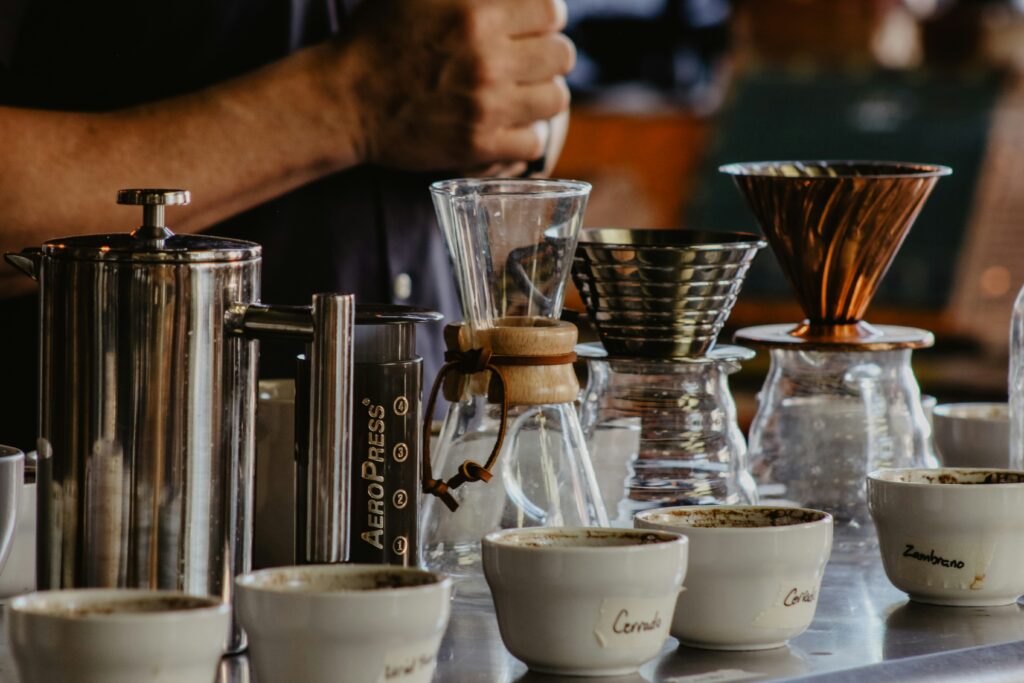
French press is an immersion brewing method — coffee grounds sit fully submerged in hot water for several minutes of complete contact before being separated through pressing a metal mesh filter to the bottom of the vessel. The metal mesh filter allows coffee oils and fine particles to pass through into your cup.
Pour over is a percolation brewing method — hot water is poured over coffee grounds and passes through them by gravity through a paper or metal filter into a vessel below. The brewing contact time is shorter and the filtration more thorough than French press — particularly when using paper filters that trap oils and fine particles that metal filters pass through.
This fundamental difference in contact time and filtration method creates every meaningful taste difference between the two resulting cups.
Taste Comparison — The Most Important Factor
French Press Taste Profile
French press produces a rich full bodied cup with pronounced depth of flavor that coffee enthusiasts describe as robust rounded and satisfying. The metal mesh filtration allows coffee oils — which contain significant flavor compounds — to pass freely into your cup rather than being trapped by paper filtration. These oils contribute the body mouthfeel and flavor complexity that French press advocates consistently cite as the method’s primary advantage.
The extended immersion contact time of 4 minutes extracts a complete range of flavor compounds from the grounds — including some slightly bitter and earthy notes that contribute to the characteristic boldness that French press coffee displays compared to lighter cleaner brew methods. Fine particles that pass through the metal mesh create a slightly sediment containing cup that most French press drinkers enjoy but some find unpleasant.
Pour Over Taste Profile
Pour over produces a cleaner brighter cup with more pronounced flavor clarity that allows the specific characteristics of high quality beans to come through more distinctly than immersion methods permit. The paper filter removes the oils and fine particles that French press passes through — producing a cup with lighter body but greater flavor clarity that coffee enthusiasts describe as nuanced delicate and complex.
The controlled pour over technique allows precise management of water temperature, flow rate, and distribution — giving experienced pour over brewers significant control over extraction that produces cups tailored to specific taste preferences with a precision that French press immersion cannot match. Each pour over variable adjustment produces a noticeably different result — making pour over the preferred method of specialty coffee professionals who want maximum control over their brewing.
Winner on Taste:
Depends entirely on personal preference. Rich bold full bodied — French press wins. Clean bright nuanced — pour over wins. Neither is objectively superior.
Convenience Comparison
French Press Convenience
French press brewing is remarkably simple — add coarsely ground coffee, pour hot water, wait 4 minutes, press, pour. The process requires no special technique, no pouring skill, and no particular equipment beyond the French press itself and a source of hot water. Setting up a French press brew takes under 2 minutes of active involvement before the 4 minute steep requires no attention.
The primary convenience disadvantage of French press is cleanup — disassembling the press, disposing of the wet grounds that cling to the mesh filter, thoroughly rinsing the mesh to remove all ground particles, and cleaning the glass vessel adds 3–5 minutes of cleanup that pour over paper filter disposal eliminates with a single lift and bin drop.
Pour Over Convenience
Pour over brewing requires more active involvement than French press — the pouring technique requires attention, consistency, and the 30–60 second initial bloom pour followed by controlled subsequent pours demands your presence throughout the 3–4 minute brewing process. This active involvement is genuinely enjoyable for coffee enthusiasts who appreciate the meditative ritual of pour over preparation but less practical for rushed morning routines where 5 minutes of focused attention is not reliably available.
The cleanup advantage is significant — lift the filter containing all grounds, drop in the bin, and rinse the minimal dripper and vessel in seconds. No mesh cleaning, no grounds disposal challenge, no disassembly required.
Winner on Convenience:
French press for simpler technique. Pour over for easier cleanup. Overall roughly equal with different trade offs.
Equipment Cost Comparison
French Press Cost
A quality French press costs $15–$40 — a one time purchase that requires no ongoing consumable costs beyond coffee itself. No filters to purchase, no replacement parts required for years of regular use, and the simple mechanical design has minimal failure points that create replacement needs. The total lifetime cost of French press brewing is genuinely minimal beyond the initial purchase.
Pour Over Cost
A quality pour over dripper costs $10–$30 — comparable to French press initial investment. However paper filters add an ongoing consumable cost of approximately $5–$10 per month for daily brewing — a $60–$120 annual cost that accumulates meaningfully over years of regular use. Metal reusable pour over filters eliminate this ongoing cost but compromise the paper filtration that produces pour over’s characteristic clean cup.
Winner on Cost:
French press wins on long term cost through elimination of filter consumable expenses.
Grind Requirements
French Press Grind
French press requires a coarse uniform grind — the coarsest setting on most grinders. This coarse grind is the most forgiving of the two methods — minor grind inconsistencies produce less noticeable taste impact than the same inconsistencies do in pour over brewing. A basic blade grinder produces acceptable French press results while delivering poor pour over results — making French press more accessible for home brewers without quality burr grinders.
Pour Over Grind
Pour over requires a medium to medium fine uniform grind that varies by dripper design and personal preference — more precise than French press grind requirements. Grind inconsistency affects pour over results significantly — inconsistent grind sizes extract at different rates producing uneven extraction that creates bitter or sour notes in the final cup. A quality burr grinder that produces consistent uniform grind size is strongly recommended for consistently good pour over results.
Winner on Grind Accessibility:
French press wins — more forgiving of equipment limitations and grind inconsistency.
Brew Time Comparison
French Press Brew Time:
- Boil water: 2–3 minutes with electric kettle
- Add grounds and water: 1 minute
- Steep: 4 minutes
- Press and pour: 1 minute
- Total active time: 2 minutes
- Total elapsed time: 7–8 minutes
Pour Over Brew Time:
- Boil water: 2–3 minutes with electric kettle
- Set up filter and rinse: 1 minute
- Bloom pour and wait: 45 seconds
- Main pour phases: 2–3 minutes
- Total active time: 4–5 minutes
- Total elapsed time: 6–8 minutes
Winner on Brew Time:
Essentially equal total time — French press requires less active attention during brewing.
Which Should You Choose?
Choose French Press if:
- You prefer a rich full bodied bold coffee with pronounced depth and mouthfeel
- You value brewing simplicity and do not want to master pouring technique
- You want zero ongoing consumable costs beyond coffee
- You do not mind slightly more involved cleanup
- You use a basic blade grinder rather than a quality burr grinder
- You brew for 2 or more people regularly — French press scales easily to larger quantities
Choose Pour Over if:
- You prefer a clean bright nuanced cup that highlights specific bean characteristics
- You enjoy the ritual and mindful engagement of active brewing technique
- You own or plan to purchase a quality burr grinder for consistent grind
- You want minimal cleanup after brewing
- You brew single servings primarily
- You use high quality specialty beans whose specific flavor characteristics you want to taste clearly
The honest answer for most home coffee drinkers:
Start with French press. The lower barrier to entry, more forgiving technique, lower equipment cost, and excellent cup quality make it the ideal starting point for anyone moving beyond automatic drip brewing for the first time. Graduate to pour over when you develop the bean quality appreciation and technique interest that makes pour over’s additional involvement genuinely rewarding rather than merely inconvenient.
Both French press and pour over brewing methods deliver significantly better coffee than most automatic drip machines at the same price point. If you prefer the convenience of automatic brewing without sacrificing quality check out our complete guide to the best coffee makers under $50 for the most affordable automatic options that brew genuinely great coffee every morning. Whichever brewing method you choose the quality of your water temperature directly impacts the final result.
A quality electric kettle with precise temperature control makes a meaningful difference to both French press and pour over results — check out our complete guide to the best electric kettles under $50 for affordable options that deliver precise brewing temperature control. And if you pack your own lunch to go alongside your morning coffee check out our complete guide to the best lunch boxes for adults for top picks that keep food fresh and delicious for work and school every single day.