The nonstick vs stainless steel cookware debate is one of the most important kitchen equipment decisions any home cook makes. According to the American Cancer Society, the health safety of cookware materials has become an increasingly important consideration for health-conscious home cooks — with the type of cookware used affecting not only cooking performance but also the chemical compounds that contact food during the cooking process and the long-term safety implications of regular cookware use across years of daily cooking.
Yet most home cooks make their cookware choices based on price availability or vague familiarity rather than a genuine understanding of what each material does better what it does worse and which one suits their specific cooking habits and priorities.
The nonstick vs stainless steel cookware question does not have a universal correct answer — it has a correct answer for your specific cooking style frequency and priorities. This complete comparison gives you everything you need to make the right choice rather than the one that looks most appealing in the store.
Nonstick vs Stainless Steel Cookware…Understanding How Each Material Works?
Before comparing specific performance attributes understanding the fundamental mechanism of each cookware material explains every cooking characteristic that follows.
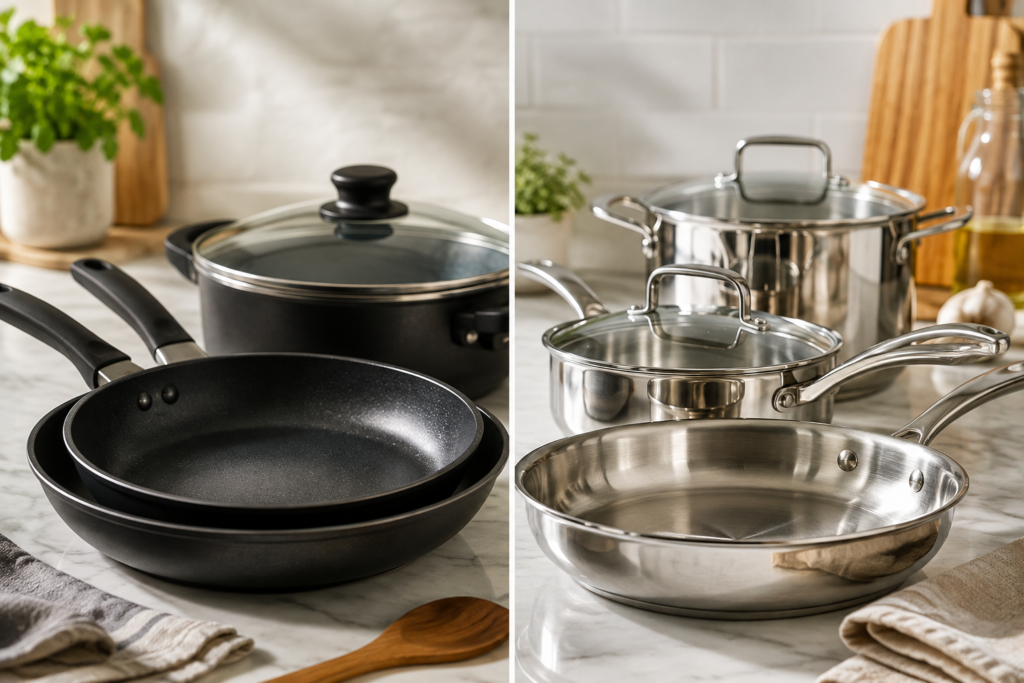
Nonstick cookware uses a polymer coating — most commonly PTFE known commercially as Teflon or newer ceramic-based alternatives — applied to an aluminum or steel base to create a surface that food does not adhere to during cooking. The coating prevents the molecular bonding between food proteins and the cooking surface that causes sticking — allowing low-fat cooking without the residual fond that direct metal-to-food contact creates.
Stainless steel cookware is uncoated metal — typically 18/10 stainless steel — that conducts heat from the cooking surface directly into food contact without any intervening coating layer. Stainless steel allows food to bond slightly with the cooking surface during initial contact — the Maillard reaction browning that creates the fond that professional cooks deglaze for sauces and that produces the superior crust development on proteins that nonstick coatings prevent.
This fundamental difference in surface interaction explains every cooking performance difference between the two materials.
Comparisons on the basis of Certain key aspects
Here we are describing some comparisons on the basis of certain key aspects which can help you choose the right one.
Cooking Performance Comparison
Nonstick Cooking Performance
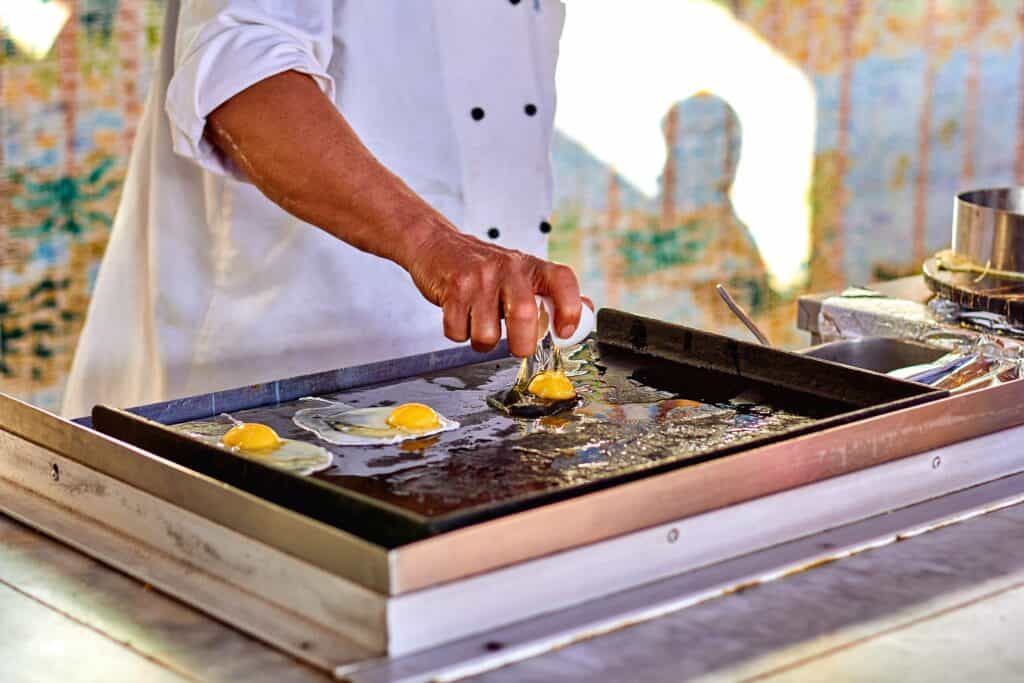
Nonstick cookware excels at cooking delicate foods that would adhere to and break apart on uncoated surfaces — eggs in every preparation scrambled fried and over-easy fish fillets that need to release cleanly without tearing pancakes and crepes that require clean release for intact presentation and low-fat cooking that omits the oil quantities that help prevent sticking on uncoated surfaces.
The cooking performance advantage of nonstick is most significant for breakfast cooking where egg adhesion is the primary challenge and for fish that tears easily when it sticks to pan surfaces during flipping. For these applications nonstick produces results that are genuinely superior to stainless steel — cleaner releases more intact presentations and less cooking frustration for home cooks who cook eggs and fish daily.
The cooking performance limitation of nonstick is the absence of the high-heat browning capability that produces the crust development and fond creation that professional cooking technique relies on. Nonstick coatings degrade rapidly above 500 degrees Fahrenheit — the temperature range that searing meats and achieving proper caramelization requires. This high-heat limitation prevents nonstick from delivering the cooking results that seared proteins and properly caramelized vegetables require.
Stainless Steel Cooking Performance
Stainless steel excels at high-heat applications where the direct metal-to-food contact that creates browning and crust development is the desired outcome. Seared chicken with crispy skin properly browned beef crust and caramelized onions all develop on stainless steel in ways that nonstick coatings actively prevent through their non-reactive surface that also prevents the Maillard reaction that creates these results.
The stainless steel cooking performance advantage is most significant for protein searing pan sauces made from fond deglazing oven-to-stovetop cooking that requires high temperature tolerance and any cooking technique where surface browning is the primary performance objective.
The cooking performance limitation of stainless steel is the learning curve required to cook without sticking — a technique challenge that involves proper preheating before adding oil and food and that takes several cooking sessions to master reliably. Home cooks who attempt stainless steel cooking without mastering the preheat technique consistently experience sticking that makes them conclude incorrectly that stainless steel is simply inferior to nonstick rather than recognizing the technique gap that the sticking actually indicates.
Cooking Performance Winner: Depends entirely on what you cook. Nonstick wins for eggs fish and low-fat cooking. Stainless steel wins for searing browning and high-heat professional technique.
Health and Safety Comparison
Nonstick Health Considerations
Traditional PTFE-based nonstick coatings are considered safe for normal cooking temperatures by regulatory agencies including the FDA. The health concern associated with nonstick cookware relates to overheating — above 500 degrees Fahrenheit PTFE coatings begin to break down and release fumes that cause flu-like symptoms in humans and are potentially fatal to pet birds whose respiratory systems are particularly sensitive to airborne chemical compounds.
The practical implication for most home cooks is straightforward — never preheat an empty nonstick pan never use nonstick on high heat and replace scratched or degraded nonstick cookware immediately. Nonstick used within its intended temperature range by a cook who follows manufacturer guidance presents minimal health concern for most cooking applications.
PFAS-free ceramic nonstick alternatives have emerged as a health-conscious option that avoids PTFE entirely — providing nonstick cooking surface performance through ceramic coating technology that does not degrade at elevated temperatures in the same way. Ceramic nonstick currently durability-underperforms traditional PTFE alternatives but provides the health-conscious home cook a genuinely PFAS-free nonstick option.
Stainless Steel Health Profile
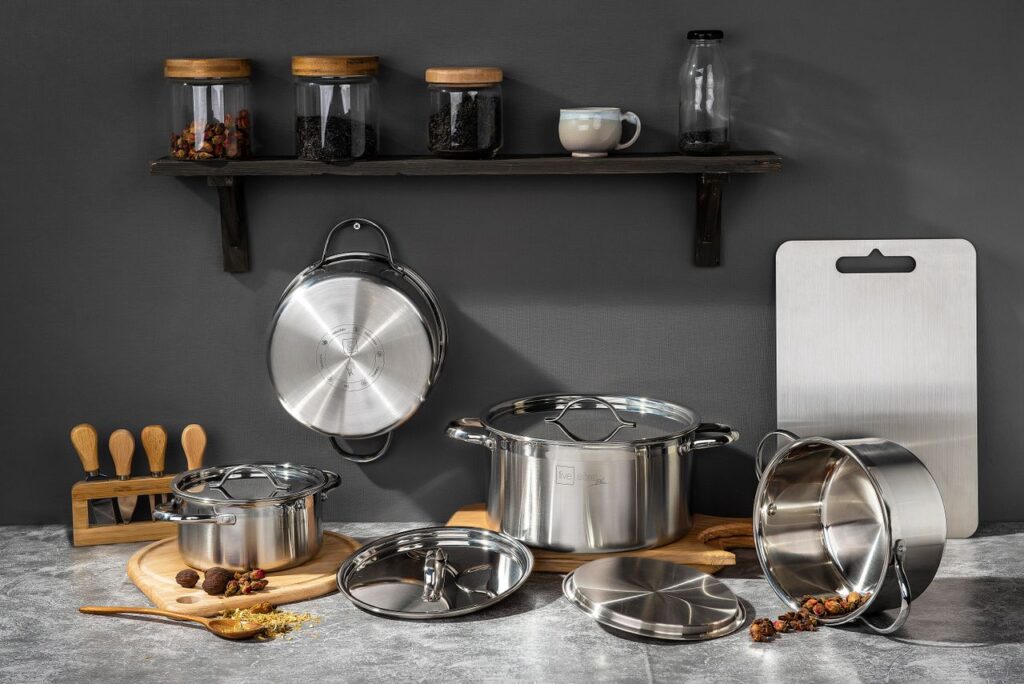
Stainless steel is considered one of the safest cookware materials available — a chemically inert surface that does not leach compounds into food at any cooking temperature and that does not degrade through use in ways that release cooking surface material into food. The 18/10 stainless steel alloy that quality cookware uses is food-safe across the complete range of cooking temperatures that any stovetop or oven application involves.
The one nuanced health consideration of stainless steel is nickel leaching into acidic foods during extended cooking — relevant for individuals with documented nickel sensitivity who should avoid cooking acidic tomato-based sauces in stainless for prolonged periods. For the majority of home cooks without nickel sensitivity stainless steel presents no health concerns whatsoever across the complete range of cooking applications.
Health Winner: Stainless steel for absolute safety certainty with no coating degradation concerns. Nonstick safe within intended temperature range but requires user adherence to temperature guidelines.
Durability Comparison
Nonstick Durability
Nonstick cookware has a finite usable lifespan determined primarily by coating integrity — scratches from metal utensils chips from impact damage and degradation from high heat all reduce coating effectiveness over time. Quality nonstick cookware used properly with silicone or wood utensils at appropriate temperatures lasts 3 to 5 years before requiring replacement. Budget nonstick cookware used improperly lasts months.
The durability limitation of nonstick is not the metal base — the underlying aluminum or steel base is indefinitely durable — but the coating layer that the cooking performance depends on. Once the coating degrades sufficiently to cause sticking the cookware must be replaced regardless of how sound the underlying construction remains.
Stainless Steel Durability
Stainless steel cookware is essentially indefinitely durable under normal cooking conditions — the uncoated metal construction has no coating layer to degrade no temperature limit that causes surface damage and no utensil restriction that risks surface scratching. Quality stainless steel cookware that is well maintained should last decades of daily cooking use and potentially a lifetime.
The durability advantage of stainless steel over nonstick is one of the most significant long-term financial arguments for the stainless investment — the lifetime replacement cost of cycling through multiple nonstick sets over 20 years often exceeds the one-time investment in quality stainless steel cookware that serves the same period without replacement.
Durability Winner: Stainless steel — indefinitely durable versus nonstick’s finite 3 to 5 year coating lifespan.
Cleaning and Maintenance Comparison
Nonstick Cleaning
Nonstick cookware cleans with minimal effort — the non-reactive surface releases food residue with a simple wipe or quick soak without the soaking and scrubbing that stuck-on food residue on stainless requires. This cleaning ease is one of the primary reasons nonstick remains popular with home cooks who prioritize post-cooking cleanup speed above other performance considerations.
However nonstick cleaning has specific restrictions — most nonstick cookware is not dishwasher safe because dishwasher detergent and high-heat drying cycles degrade coating performance over time. The hand-wash requirement that extends nonstick lifespan adds manual cleaning effort that dishwasher-compatible stainless alternatives eliminate.
Stainless Steel Cleaning
Stainless steel requires more cleaning effort than nonstick when food residue sticks during cooking — the fond that makes stainless excellent for pan sauces requires soaking and scrubbing when not deglazed during cooking. This additional cleaning effort is the primary day-to-day disadvantage of stainless steel compared to nonstick’s wipe-clean convenience.
However stainless steel is fully dishwasher safe — the uncoated surface tolerates dishwasher cleaning without any degradation concern that nonstick’s coating restrictions create. For home cooks who prioritize dishwasher compatibility stainless steel’s full dishwasher compatibility partially offsets the additional hand-scrubbing effort when cleanup requires it.
Cleaning Winner: Nonstick for ease of hand washing. Stainless for dishwasher compatibility. Depends on your cleanup preferences and dishwasher availability.
Cost Comparison
Nonstick Cost
Entry-level nonstick cookware starts at $15 to $30 per pan — the lowest entry cost of any cookware category. However the 3 to 5 year replacement cycle that nonstick coating lifespan creates means that a $30 nonstick pan replaced every 4 years costs approximately $150 over 20 years — more than many quality stainless steel pans that last indefinitely.
Mid-range nonstick sets run $60 to $150 for multi-piece collections that provide complete kitchen coverage at initial purchase prices that feel significantly lower than equivalent stainless steel sets.
Stainless Steel Cost
Quality stainless steel cookware starts at $40 to $80 for individual pieces — higher initial cost than comparable nonstick alternatives. However the indefinite lifespan of quality stainless steel means that a $60 stainless steel pan purchased once represents a lower 20-year cost than three replacement nonstick pans at $30 each over the same period.
Complete quality stainless steel sets run $150 to $400 — significantly higher initial investment than nonstick alternatives at equivalent piece counts. The long-term cost calculation favors stainless significantly despite the higher initial purchase price for home cooks who maintain cookware for more than 5 years.
Cost Winner: Nonstick for lower initial investment. Stainless for lower long-term lifetime cost.
Which Should You Choose?
Choose Nonstick if:
You cook eggs daily and prioritize clean release above all else. You cook fish regularly and need gentle release without tearing delicate fillets. You cook with minimal oil for health reasons and depend on the coating to prevent sticking that oil-free cooking on stainless creates. You are a beginner cook who is not yet comfortable with the stainless steel preheating technique that prevents sticking. You have a limited budget and need capable cookware at the lowest initial investment.
Choose Stainless Steel if:
You cook proteins regularly and want the crust development and searing results that nonstick prevents. You want lifetime durability without replacement cycles. You cook sauce-forward dishes that benefit from fond deglazing. You want fully dishwasher-safe cookware without coating care restrictions. You want the healthiest cookware material with no temperature limitation concerns. You plan to use high heat for searing braising and oven finishing.
Use Both if:
Most professional and enthusiastic home cooks find that one or two nonstick pans for eggs and fish alongside a stainless steel skillet and saucepan for everything else represents the optimal combination — each material serving the cooking applications where it genuinely outperforms the alternative.
Both nonstick and stainless steel cookware have genuine strengths that make each the better choice in specific cooking situations. And once your cookware decision is made check out our complete guide to the best dish drying racks for any kitchen — the top 10 picks that keep every kitchen organized and every dish perfectly dry after washing. For the precision cutting tools that work equally well with both cookware types check out our complete guide to the best knife sets under $50 — the cutting tools that complement any cookware investment for faster and more enjoyable cooking.
Understanding the genuine differences between nonstick and stainless steel cookware allows you to make a confident informed investment that serves your specific cooking style for years rather than a random choice you second-guess every time you reach for a pan. For more smart kitchen appliance guidance check out our complete guide to the best stand mixers for home cooks in 2026 — another major kitchen investment that deserves the same careful consideration this cookware comparison provides.
Frequently Asked Questions
Q: Is nonstick cookware actually safe to use daily?
A: Yes — when used within manufacturer guidelines. Keep temperatures below 500 degrees Fahrenheit never preheat empty nonstick pans and replace cookware when coating shows visible damage or degradation. PFAS-free ceramic nonstick options provide an additional safety margin for health-conscious cooks who want to avoid PTFE entirely.
Q: How do I prevent food from sticking to stainless steel?
A: The technique is simple but requires practice. Preheat the empty stainless pan over medium heat for 2 to 3 minutes until water droplets bead and skitter across the surface — the mercury ball test. Add oil and heat briefly until shimmering then add food. Properly preheated stainless releases food cleanly through the same principle that makes nonstick effective — thermal expansion of the metal surface that closes the microscopic pores where food proteins initially bond.
Q: Can I use metal utensils with stainless steel cookware?
A: Yes — stainless steel’s uncoated surface tolerates metal utensil contact without any damage concern. This is one of stainless steel’s significant practical advantages over nonstick cookware that requires silicone or wood utensil restriction to protect the coating from scratching.
Q: Which cookware type is better for induction cooktops?
A: Stainless steel with a magnetic base works on induction cooktops. Aluminum-based nonstick does not work on induction unless it has an induction-compatible base layer. When purchasing nonstick for an induction cooktop specifically look for the induction-compatible designation that confirms the base material’s magnetic properties.
Q: How do I know when to replace nonstick cookware?
A: Replace nonstick cookware when the coating shows visible scratches chips or peeling when food begins sticking despite proper technique and appropriate heat levels or when the coating discolors significantly from prior overheating. Degraded nonstick coating is not worth continuing to use — the cooking performance loss and potential health concerns from degraded coating are both compelling reasons for prompt replacement.
Conclusion
The nonstick vs stainless steel cookware decision comes down to honest self-assessment of your actual cooking habits rather than the idealized cooking you aspire to. If eggs and fish are your daily cooking reality nonstick serves you better. If proteins sauces and high-heat cooking define your kitchen time stainless is the smarter investment.
The home cook who benefits most from this comparison is the one who makes a deliberate considered choice rather than defaulting to the cheaper option or the most familiar material. Both materials serve their appropriate applications excellently. The only genuinely wrong choice is using either material for applications where the other is clearly superior. Explore the complete collection of kitchen guides and reviews at BudgetKitchenPick.com — blogs page — for honest practical advice on every kitchen tool and appliance decision you face.