Meal prepping for the week in two hours is one of the most impactful habits any home cook can develop for their health budget and daily stress levels. According to research published by the International Journal of Behavioral Nutrition and Physical Activity, people who regularly meal prep consume significantly more fruits and vegetables spend less money on food and report lower levels of daily mealtime stress than those who decide what to eat on a day by day basis without advance planning or preparation.
Yet the majority of people who would benefit most from meal prepping never start — intimidated by elaborate meal prep videos that make the process look like a full-day professional kitchen operation rather than the practical 2-hour weekly routine that it actually is when done intelligently.
Knowing how to meal prep for the week in two hours is not about cooking elaborate recipes for every meal in advance. It is about preparing the foundational components — proteins grains roasted vegetables and sauces — that combine into different meals throughout the week without requiring significant additional cooking effort on busy weeknights when time and energy are limited. This guide gives you the complete system for doing exactly that.
Why Meal Prep for the week in two Hours Changes Everything?
The home cooks who build a consistent meal prep habit consistently report that the impact on their weekly experience extends far beyond simply having food ready. Here is exactly what a consistent two hour meal prep routine provides:
Financial savings — The average American household wastes $1,500 annually on food that spoils before being used — most of it fresh ingredients purchased with good intentions and no specific plan for their use. Meal prepping with a specific weekly menu eliminates this waste almost entirely by ensuring every purchased ingredient has a designated meal destination before it enters your kitchen.
Time recovery — The cumulative time spent deciding what to cook preparing ingredients and cooking individually each evening of the week typically exceeds 2 hours — making the dedicated weekly session time-neutral or better at worst and a significant time saving at best when weeknight cooking reduces to simple assembly and reheating rather than starting from scratch every evening.
Nutritional improvement — Weeknight decisions made when tired and hungry consistently produce worse nutritional choices than decisions made during a calm planning session earlier in the week. Prepped food available in your refrigerator eliminates the hungry decision-making that drives takeout ordering and convenience food choices that meal prep-ready refrigerators never tempt you toward.
Reduced daily stress — The daily question of what to cook for dinner is a surprisingly significant source of decision fatigue and evening stress for many households. Having the week’s meals planned and largely prepared converts a daily stressor into a non-issue that requires zero mental energy on the evenings when you have the least available.
The Meal Prep Mindset Shift That Makes Everything Easier
The most important realization for anyone learning how to meal prep for the week in two hours is this — you are not cooking meals in advance. You are preparing components that become meals.
The difference is significant. Cooking seven complete meals in advance is genuinely time consuming creates storage challenges and produces food that is less enjoyable on day six than it was on day one. Preparing the building blocks that assemble into varied meals throughout the week is fast flexible and produces fresh-tasting results every day.
Think in components not meals. Cooked grains that become a grain bowl on Monday a stuffed pepper on Wednesday and a stir fry on Thursday. Roasted vegetables that top a salad on Tuesday appear in a wrap on Wednesday and mix into eggs on Friday morning. Marinated protein that grills for five minutes on any evening or goes cold into a lunch salad without any additional cooking.
This component approach is the foundation of how to meal prep for the week in two hours — preparing flexible ingredients rather than fixed meals.
Before You Start — The 15-Minute Planning Session
The 2-hour meal prep session only works efficiently when it is preceded by a 15-minute planning session that identifies exactly what you will prepare and in what order. Without this planning session the prep session fills with decision-making pauses that extend the time significantly beyond 2 hours.
The planning session covers five decisions:
Which protein will you batch cook this week? Choose one or two proteins — chicken thighs ground turkey hard boiled eggs or canned beans — that work across multiple meal types rather than proteins with limited application.
Which grains will you cook? Rice quinoa or pasta that serves as the base for multiple meals throughout the week. The rice cooker or instant pot handles these without requiring your attention during prep time.
Which vegetables will you roast? A large sheet pan of mixed vegetables roasted at 400 degrees for 25 minutes produces a versatile component that enhances almost every meal type from bowls to wraps to eggs.
Which sauces or dressings will you make? One or two simple sauces prepared in advance transform bland components into satisfying varied meals — a simple tahini dressing a basic tomato sauce or a yogurt herb sauce that applies to different meal combinations throughout the week.
What are the five to seven meals this week’s components will create? Map the components to specific meals so you know exactly what each family member will eat each day and that every prepared component has a designated use rather than potentially spoiling unused.
The two Hour Meal Prep System — Step by Step
Minutes 0–15: Kitchen Setup and Oven Preheat
Start by preheating your oven to 400 degrees Fahrenheit and gathering every ingredient you will use during the session. Having everything on the counter before you start eliminates the refrigerator trips and cabinet searching that interrupt workflow and extend your total session time.
Set up three preparation zones on your counter — a cutting zone with your cutting board and knife a cooking zone near your stove and a storage zone where finished components go directly into labeled containers ready for refrigerator storage.
Start your rice cooker or instant pot with this session’s grains — these appliances require your attention only for initial setup and then operate independently while you work on everything else simultaneously. The hands-free grain cooking that these appliances provide is one of the most significant time efficiencies in the entire two hour meal prep system.
Minutes 15–40: Vegetable Preparation and Roasting
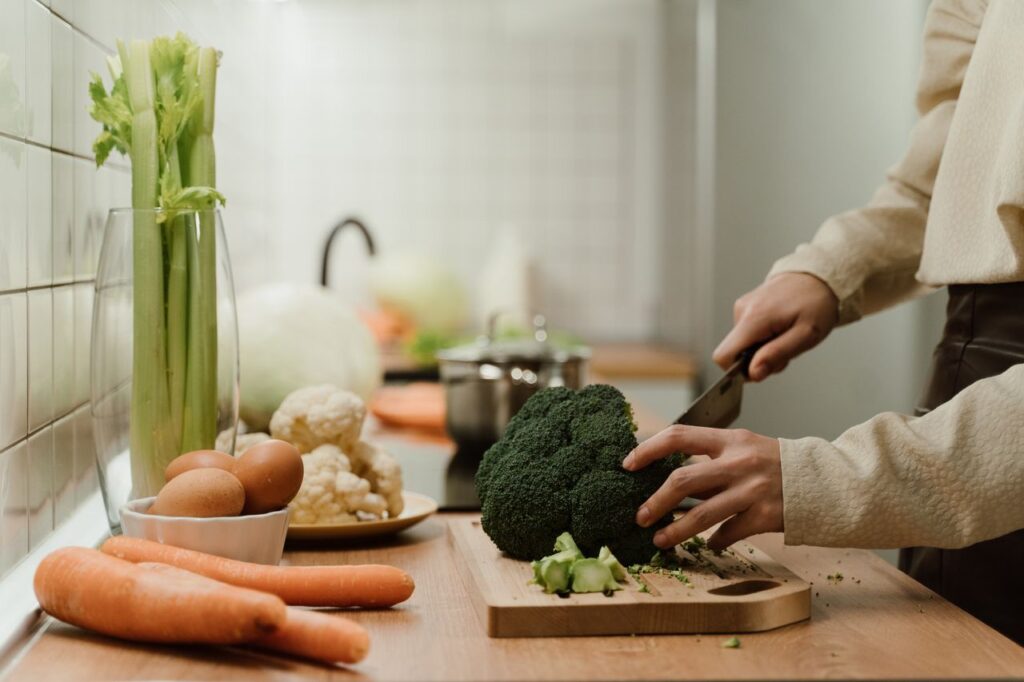
Chop all vegetables for roasting — aim for consistent 1-inch pieces that cook evenly in the same time without requiring size-sorted separate roasting trays. Toss with olive oil salt and pepper then spread across one or two large sheet pans in a single layer without overcrowding that would steam rather than roast the vegetables.
Place the sheet pans in the preheated oven — 25 minutes of roasting time during which you prepare your proteins and sauces simultaneously without monitoring the vegetables beyond a single halfway turn if desired.
Also use this time to wash and dry salad greens for the week — storing in containers lined with paper towels that absorb moisture and extend greens freshness significantly beyond unwashed storage life.
Minutes 40–75: Protein Preparation and Cooking
While vegetables roast prepare your weekly protein batch. The most efficient meal prep proteins are those that cook quickly require minimal active attention and work across multiple meal types without tasting repetitive:
Sheet pan chicken thighs — season simply with garlic olive oil salt and herbs and roast alongside or after the vegetables. The oven does the work while you prepare sauces and package already-finished components.
Ground turkey or beef — brown in a large skillet with basic seasoning in 10 to 12 minutes. Divides into Mexican-seasoned portions for taco bowls Italian-seasoned portions for pasta and Asian-seasoned portions for stir fry through simple seasoning additions to the base-cooked protein.
Hard boiled eggs — use your egg cooker for perfectly cooked eggs in 12 minutes without monitoring. Six to eight eggs provide a complete week of protein additions to salads bowls and quick breakfasts.
Minutes 75–100: Sauce Preparation and Component Assembly
While proteins finish cooking prepare one or two simple sauces that will elevate the week’s component meals beyond plain ingredients:
Simple tahini sauce — tahini lemon juice garlic and water whisked together in 3 minutes. Works on grain bowls roasted vegetables and protein as a universal flavor booster.
Basic vinaigrette — olive oil vinegar mustard and seasoning in 2 minutes. Dresses salads marinates proteins and finishes roasted vegetables equally well.
Tomato sauce — canned tomatoes garlic and herbs simmered for 15 minutes while other components finish cooking. Forms the base for pasta quick pizzas and protein sauces throughout the week.
Minutes 100–120: Portioning Labeling and Refrigerator Organization
The final 20 minutes of the session — the step that determines whether your 2-hour investment actually produces the weeknight convenience it is designed for. Portioning and labeling immediately after cooking maintains the food safety standards that delayed storage compromises and creates the organized refrigerator that makes weeknight meal assembly immediate rather than a search-and-discover operation.
Use clear containers that allow visual identification of contents — seeing what is available at a glance when you open the refrigerator is what makes reaching for prepped ingredients effortless rather than deliberate.
Label every container with contents and preparation date — a simple piece of masking tape and a marker takes 15 seconds per container and ensures nothing gets used past safe consumption windows. Refrigerated cooked components keep safely for 4 to 5 days — the Sunday prep session covering the full Monday through Friday working week.
Organize containers in the refrigerator by meal type — breakfast components together lunch components together and dinner components together — so that each meal’s assembly requires only one refrigerator section rather than searching across the entire refrigerator for scattered components.
Sample Weekly Meal Prep Plan — two Hours
Here is an example of a complete weekly component prep session that produces varied satisfying meals throughout the week using the system above:
Prep session components:
- 2 cups brown rice — rice cooker handles independently
- 6 chicken thighs — sheet pan roasted with garlic and herbs
- 2 sheet pans mixed vegetables — bell peppers zucchini broccoli and sweet potato
- 8 hard boiled eggs — egg cooker handles independently
- Tahini sauce and basic vinaigrette
Meals these components create:
- Monday dinner — chicken rice bowl with roasted vegetables and tahini sauce
- Tuesday lunch — green salad with sliced chicken hard boiled egg and vinaigrette
- Tuesday dinner — chicken and vegetable stir fry over rice
- Wednesday lunch — grain bowl with roasted vegetables tahini and hard boiled egg
- Wednesday dinner — chicken wrap with roasted vegetables and yogurt sauce
- Thursday dinner — fried rice with vegetables and egg using leftover rice
- Friday lunch — salad with remaining chicken vegetables and vinaigrette
Seven varied satisfying meals from one 2-hour preparation session using five component types.
Essential Kitchen Tools That Make the two Hour Goal Achievable
The specific kitchen tools you use during your meal prep session significantly affect whether you complete the session comfortably within 2 hours or consistently run over time:
A sharp chef’s knife and large cutting board — the single highest-impact kitchen tool investment for meal prep speed. A sharp knife that moves through vegetables and proteins without resistance cuts your vegetable prep time by 50 percent compared to a dull knife that requires force and multiple passes.
A rice cooker or instant pot — hands-free grain cooking that runs independently while you focus on everything else. Starting grains in these appliances in the first 5 minutes of your session means they complete automatically during the protein and vegetable preparation without requiring any additional attention.
Large sheet pans — two full-size sheet pans allow roasting the complete week’s vegetable requirement in one oven session rather than multiple smaller batches that extend roasting time significantly.
An egg cooker — perfectly cooked eggs in 10 to 12 minutes without monitoring. Starting the egg cooker during setup adds a complete protein source to the week’s prep with essentially zero active effort.
Clear storage containers in multiple sizes — the organizational infrastructure that makes your prep session’s output immediately functional rather than a collection of uncovered bowls that create refrigerator chaos.
Common Meal Prep Mistakes to Avoid
Prepping too many complete meals instead of components — Complete meals lose appeal by day three. Component ingredients stay fresher longer and combine into genuinely varied meals throughout the week rather than the repetitive eating that complete meal prepping produces.
Skipping the planning session — Starting the prep session without a specific plan produces an inefficient session where decision-making time eliminates the time saved by batch cooking.
Using containers that are too small — Underfilling many small containers takes more time than filling fewer appropriate-size containers and creates refrigerator disorganization that makes component retrieval inefficient.
Prepping more than 5 days of food — Cooked components keep safely for 4 to 5 days. Preparing a full week of food on Sunday means Friday’s dinner uses 5-day-old components that are technically safe but noticeably less fresh than earlier-week meals.
Not drying salad greens properly — Wet greens deteriorate rapidly. Taking 5 minutes to spin and thoroughly dry salad greens at the prep session extends their refrigerator life from 2 days to 5 to 6 days — the difference between usable end-of-week salad greens and a wilted unusable refrigerator disappointment.
Building the Weekly Habit
The first meal prep session using this system typically takes closer to 2.5 hours as you develop familiarity with the workflow. By the third session the timing consistently reaches the two hour target as the component selection cooking sequence and storage routine become habitual rather than consciously managed.
The compounding benefit of the meal prep habit is what makes it worth the initial adjustment period — each week’s session becomes slightly faster and slightly more varied as your component repertoire expands and your kitchen efficiency improves through regular practice.
Meal prepping for the week in two hours is genuinely achievable once you have the right system in place. And for the food processing tools that make vegetable prep the fastest part of your meal prep session check out our complete guide to the best food processors under $50 — the kitchen tool that cuts your vegetable prep time in half.
All tips in this meal prep guide are based on genuine cooking experience and practical kitchen efficiency research. For the perfect appliance to make meal prep rice and grains completely effortless check out our complete guide to the best rice cookers under $50 — the set-it-and-forget-it appliance that handles your grain prep while you focus on everything else. And one of the most essential meal prep tools you need is a quality salad spinner — check out our complete guide to the best salad spinners for home cooks for the top picks that keep your salad greens fresh all week long.